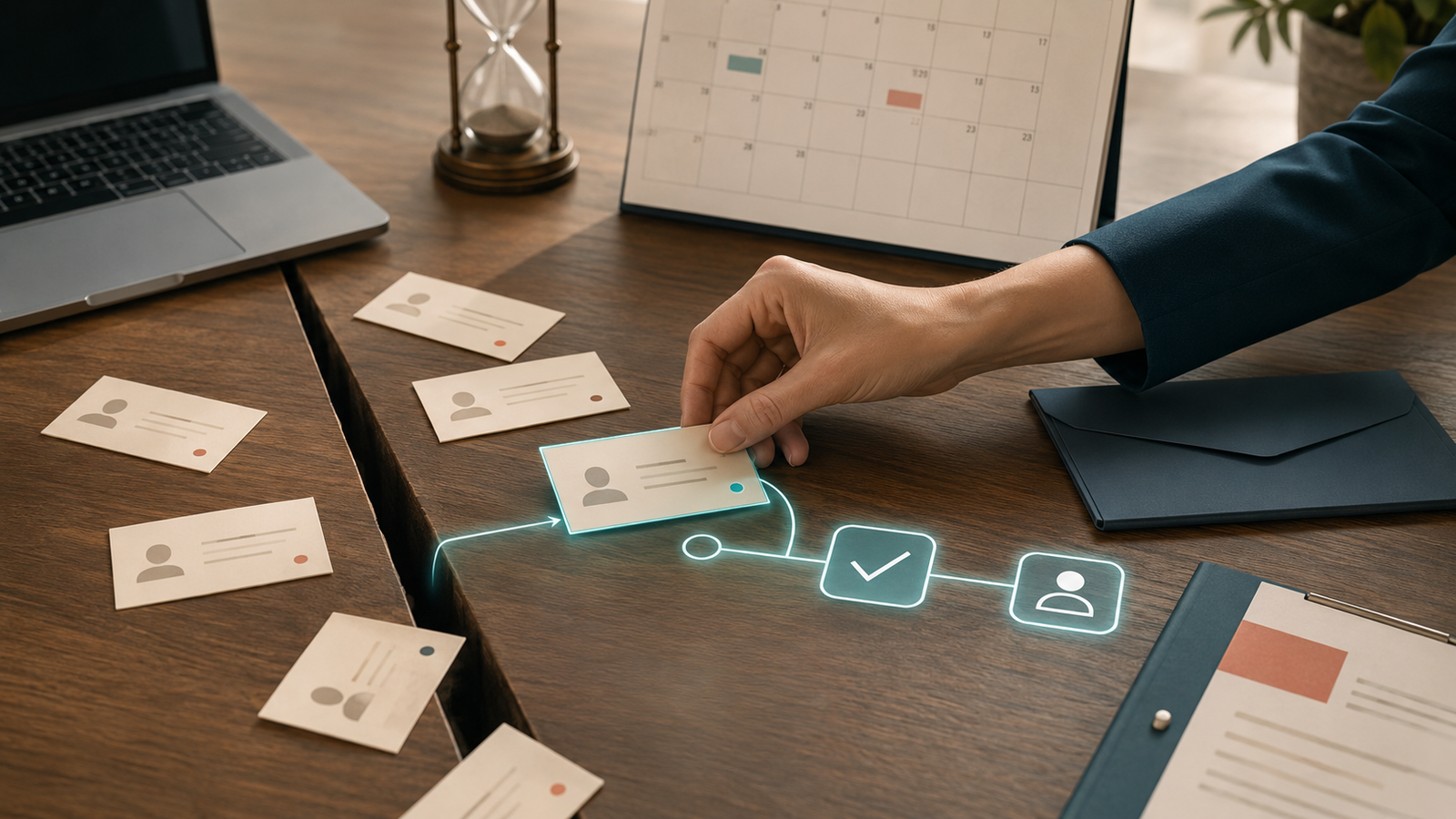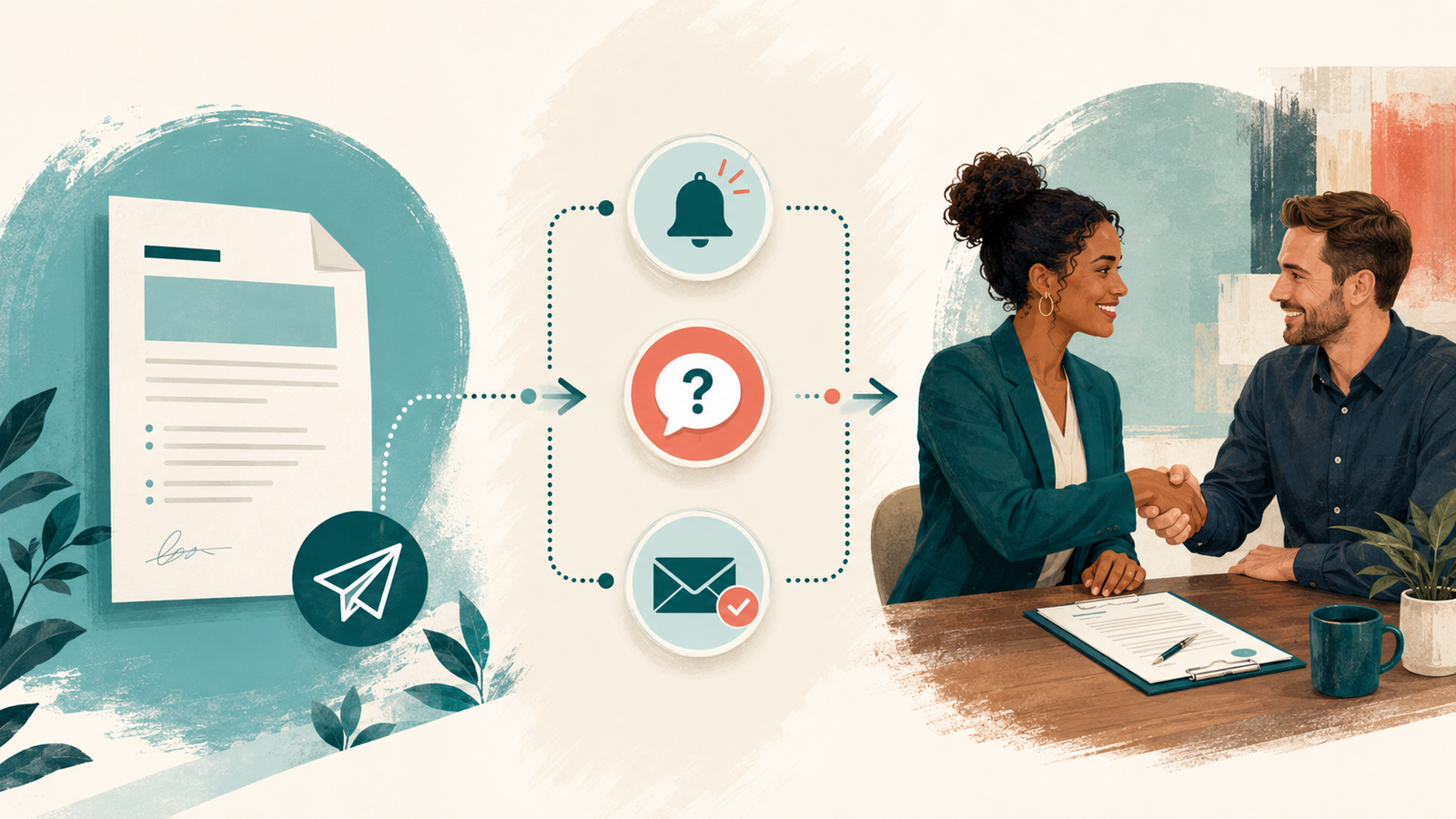
You sent the proposal.
You felt good about the conversation. They asked the right questions. The project seemed like a fit. You spent time building the scope, choosing the price, and making the document look professional.
Then you clicked send.
And waited.
A day passed. Then three. Then a week.
Now the proposal is sitting in someone’s inbox while you debate whether following up makes you look attentive or desperate.
So you send:
Just checking in to see if you had a chance to review my proposal.
They do not respond.
The problem is not always the proposal. And it is not necessarily the price.
Sometimes the deal disappears because there was no clear proposal follow-up system helping the person make a decision.
Sending the proposal is not the end of the sales process
A proposal feels like a finish line because it takes work to create.
For the potential client, it is the beginning of another stage.
Now they have to review the details, compare options, think about the investment, ask questions, involve someone else, check their calendar, and decide whether taking action feels safer than waiting.
That decision creates friction—even when they genuinely want the result.
If your process goes silent the moment the proposal is sent, the lead is left to manage all of that uncertainty alone.
This is one reason interested leads can go cold without actually rejecting you. The conversation loses momentum, everyday life takes over, and the next step becomes less clear.
Good proposal follow-up does not pressure someone into saying yes.
It keeps the decision from quietly dying of neglect.
Why good proposals get ignored
Silence can mean many things:
- The person is busy and forgot to respond
- They are still interested but uncertain about one part of the scope
- They need approval from a partner, manager, or finance person
- The proposal did not explain the next step clearly
- The investment brought up concerns they have not voiced
- They are comparing providers
- The timing changed
- They decided against it and feel awkward saying no
You cannot solve all of those possibilities with “just checking in.”
That phrase puts the work back on the lead. It asks whether they completed your task without giving them anything useful to respond to.
A stronger follow-up gives the conversation direction.
What a proposal follow-up system should do
A useful system should:
- Confirm that the proposal was delivered
- Restate the problem and desired outcome
- Make the next step obvious
- Answer likely questions before they become roadblocks
- Remind you when personal follow-up is needed
- Track where the opportunity stands
- Close the loop respectfully if the lead does not move forward
Some of those steps can be automated. Others need a human.
The point is not to schedule a parade of generic emails and hope persistence wins. The point is to build a reliable structure around a decision that already matters.
Proposal follow-up is one of the core workflows in 7 Marketing Automations Every Service Business Needs. Here is what the full system can look like.
Step 1: Confirm delivery and explain what happens next
The first message should go out when the proposal is sent.
Do not make the potential client guess whether the attachment worked, how long the price is valid, or what they should do after reviewing it.
Your message should include:
- A link or attachment to the proposal
- A short recap of what you are recommending
- The main outcome the work is designed to create
- Anything they should pay particular attention to
- The clearest next step
- When you will follow up
Proposal delivery email example
Subject: Your proposal and next steps
Hi [First Name],
I’ve attached the proposal we discussed. It outlines the recommended scope, timeline, and investment for [brief desired outcome].
Take a look when you have a chance, especially the section covering [important detail]. If questions come up, reply here and I’ll walk through them with you.
If everything looks right, the next step is [sign the agreement/book the kickoff/approve the proposal]. I’ll follow up on [day] so this does not get lost in the shuffle.
Best,
[Name]
That final sentence matters. You are setting an expectation for follow-up rather than appearing unexpectedly in their inbox several days later.
Step 2: Follow up with a useful question
Your first follow-up should not simply ask whether they saw the proposal.
Ask something that helps reveal what is actually holding up the decision.
For example:
- Does the proposed scope match what you expected?
- Is there any part you would like me to clarify?
- Is the timeline workable on your end?
- Will anyone else be involved in approving the project?
- Is there anything missing that you need before deciding?
First follow-up email example
Subject: Any questions about the proposal?
Hi [First Name],
I wanted to follow up as promised. Does the proposed scope feel aligned with what you need, or is there anything you would like me to clarify before you decide?
If it is easier, I’m happy to answer questions by email or schedule a short call.
Best,
[Name]
This gives the lead several easy ways to respond. It also signals that a question is not an objection you need to defeat. It is part of making a good decision.
Step 3: Address the most likely point of uncertainty
If the lead still does not respond, your next message should add context.
Think about the questions people commonly ask before purchasing your service:
- What will happen first?
- How much time will they need to contribute?
- What is included—and what is not?
- How quickly might they see progress?
- What happens if the scope changes?
- How will communication work?
- Why did you recommend this approach?
Choose the issue most relevant to that proposal and address it briefly.
Context-building follow-up example
Subject: One detail that may help
Hi [First Name],
One question that often comes up at this stage is how much time the project will require from your side.
For this scope, I would need [brief explanation]. The system build and setup would be handled for you, with clear review points so you are not managing every detail.
If a different concern is holding up the decision, feel free to tell me directly. I would rather answer the real question than send you another vague follow-up.
Best,
[Name]
That last line invites honesty without turning the message into a sales squeeze.
Step 4: Create a personal follow-up task
Automation should not own the entire proposal stage.
High-value, customized, or complex opportunities usually need a personal touch. Your CRM should create a task reminding you to call, send a voice note, or write a specific message based on the conversation.
The task should include:
- The proposal date
- The recommended service
- The estimated value
- Important concerns raised during the call
- Who else may be involved in the decision
- The last contact date
- The next recommended action
This is where CRM automation supports the sales process. The system remembers the details and timing. You bring the judgment.
Step 5: Close the loop
Not every proposal will turn into a sale.
That is normal.
What is not useful is allowing every undecided proposal to remain open indefinitely while you mentally count it as “maybe revenue.”
A close-the-loop message gives the lead permission to make a clear decision.
Close-the-loop email example
Subject: Should I close this out?
Hi [First Name],
I have not heard back, so I wanted to close the loop rather than keep filling your inbox.
Would you prefer to:
- Move forward with the proposal
- Revisit it at a later date
- Close it out for now
Any answer is completely fine. I just want to make sure I handle it correctly on my end.
Best,
[Name]
This message often gets a response because it removes the pressure to invent a long explanation.
If the answer is “later,” record a real follow-up date. “Someday” is not a pipeline stage.
How long should you wait between proposal follow-ups?
There is no universal schedule.
A $500 service with one decision-maker does not need the same follow-up rhythm as a $25,000 project involving a leadership team.
Base the timing on:
- The urgency discussed during the sales conversation
- The complexity and value of the project
- The number of people involved
- Whether the client gave you a decision date
- Your normal sales cycle
A practical starting structure might be:
- Day 0: Proposal delivery and next steps
- A few business days later: Useful question or clarification
- Several days after that: Context around a likely concern
- Next appropriate checkpoint: Personal outreach
- Final step: Close-the-loop message
Adjust it. A system should reflect the way your buyers decide, not force every lead into a sequence you copied from someone selling a completely different service.
What should be automated?
Automation works well for:
- Sending the proposal delivery message
- Creating follow-up tasks
- Reminding you when a proposal needs attention
- Updating pipeline stages
- Sending carefully written standard follow-ups
- Stopping the sequence when the lead replies, signs, or declines
- Moving “not now” leads into an appropriate nurture path
Human follow-up is better for:
- Complex objections
- Scope changes
- High-value opportunities
- Sensitive budget conversations
- Decisions involving several stakeholders
- Anything that requires context the automation does not have
Good automation knows its job.
Great automation also knows when the job belongs to you.
Proposal follow-up mistakes that quietly kill deals
Sending “just checking in” repeatedly
One vague message is easy to ignore. Three vague messages feel like a subscription nobody requested.
Give the lead a question, useful detail, or clear choice.
Following up without reading the conversation
If the lead told you they would present the proposal to their partner on Friday, do not send an automated email Thursday morning asking why they have not decided.
Context is part of competence.
Continuing after the person replies
Your workflow must stop or change when someone responds, signs, declines, or books a follow-up call.
An automated “Still thinking it over?” email sent after the contract is signed makes your organized system look impressively unaware.
Creating fake urgency
Do not invent deadlines or pretend your calendar is nearly full if it is not.
If the proposal genuinely expires, pricing will change, or the requested start date is at risk, explain that honestly.
Never recording why deals were lost
If someone declines, capture the reason when possible:
- Price
- Timing
- Scope mismatch
- Chose another provider
- No decision
- Problem no longer urgent
Patterns in lost proposals can tell you whether the problem is your offer, your qualification process, your positioning, or your follow-up.
What should you track?
Start with:
- Number and value of proposals sent
- Time from proposal to decision
- Proposal acceptance rate
- Number of follow-ups required
- Reasons proposals are declined
- Value of proposals sitting without a next action
You do not need more data for the sake of data.
You need enough visibility to know where decisions are stalling and whether your process is helping.
The bottom line
A proposal does not sell itself simply because it is well designed and attached to an email.
People need clarity. They need space to ask questions. They may need a reminder, a conversation, or permission to say no.
A proposal follow-up system gives the decision structure without turning you into someone who sends “just checking in” until both parties lose the will to live.
Confirm delivery. Set expectations. Ask useful questions. Address uncertainty. Create personal follow-up tasks. Then close the loop.
The goal is not to chase every proposal forever.
It is to make sure good deals do not disappear simply because nobody knew what should happen next.
Frequently asked questions
How soon should I follow up after sending a proposal?
Set the expectation when you send it. If the potential client gives you a decision date, follow that timeline. Otherwise, a few business days is a reasonable starting point for many services, adjusted for the project’s urgency, value, and complexity.
How many times should I follow up on a proposal?
There is no universal number. Use enough follow-up to clarify the decision and address likely concerns, then send a respectful close-the-loop message. Repeating the same vague check-in indefinitely does not improve the process.
What should I say instead of “just checking in”?
Ask a specific, useful question: Does the scope match what you expected? Is the timeline workable? Is there anything missing that you need before deciding? A clear question gives the lead an easier reason to respond.
Can proposal follow-up be automated?
Parts of it can. Automate delivery confirmation, reminders, CRM tasks, pipeline updates, and carefully written standard messages. Use personal follow-up for complex, high-value, or context-sensitive conversations.
When should I stop following up?
Stop when the lead accepts, declines, asks you to pause, or reaches the end of your defined sequence without responding. Send a final close-the-loop message and move the opportunity to the correct CRM stage rather than leaving it open forever.
Kieffer Media builds proposal follow-up, CRM, and lead-nurture systems for service businesses that are tired of watching good opportunities disappear after “I’ll send that over.” If your sales process stops when the proposal goes out, let’s build what happens next.