Here’s a question most business owners never ask:
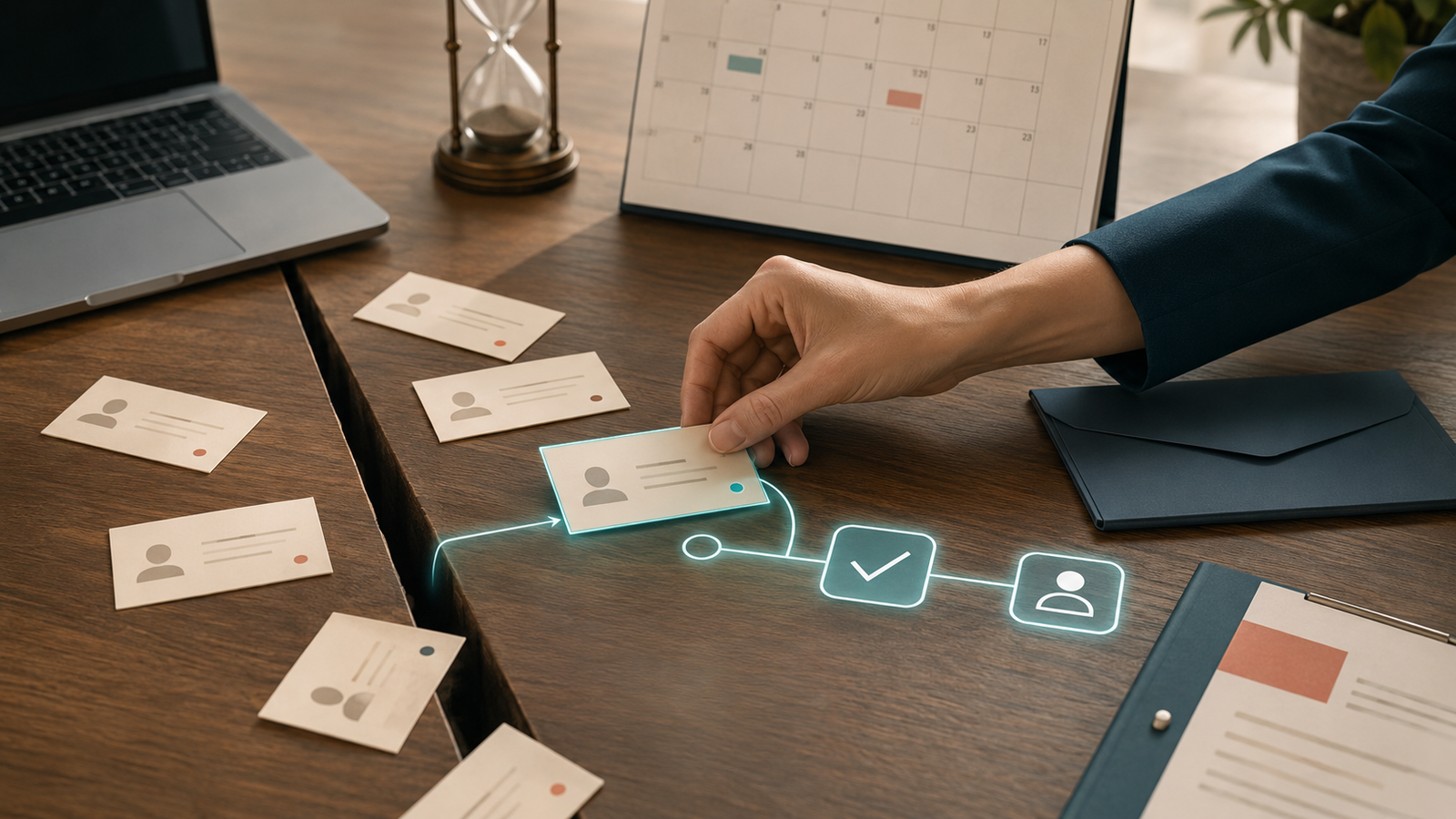
What happens after someone says they’re interested?
Not when they become a client. Not when they sign a contract. The moment after they raise their hand.
Maybe they filled out your contact form, downloaded your lead magnet, requested a quote, scheduled a consultation, or sent you a message on Facebook.
That moment is where many service businesses begin losing revenue.
Not because they are not good at what they do. Because they assume interest lasts forever.
It doesn’t.
Interest has a shelf life.
An effective email follow-up system keeps that interest alive long enough for trust to grow and decisions to happen.
Why follow-up is more important than lead generation
Many businesses believe growth comes from generating more leads.
Sometimes it does.
But often, the fastest way to grow is by converting more of the leads you already have.
Think about it. If 100 people contact your business each month and only 10 become clients, your conversion rate is 10%. If better follow-up helps 20 people become clients instead, you’ve doubled your results without spending another dollar on advertising.
That’s why follow-up isn’t an administrative task.
It’s a revenue strategy.
What is an email follow-up system?
An email follow-up system is a series of automated emails designed to guide prospects from initial interest to a confident decision.
Instead of relying on memory or manual check-ins, automation ensures every lead receives timely, relevant communication.
A complete system should:
- Deliver requested resources immediately
- Answer common questions
- Build trust
- Address objections
- Share success stories
- Invite the next step
- Continue nurturing until the timing is right
The goal isn’t to send more emails. The goal is to send the right email at the right time.
The five emails every service business should automate
Email 1: Immediate confirmation
Timing matters.
As soon as someone contacts your business, they should know you’ve received their inquiry.
Include:
- A thank-you
- What happens next
- Your expected response time
- Helpful resources while they wait
This reassures prospects they made the right choice. It also prevents the awkward silence that makes people wonder whether their message disappeared into a black hole.
Email 2: The education email
Most buyers don’t fully understand the problem they’re trying to solve.
Help them.
Teach them why the issue happens, common misconceptions, mistakes to avoid, and what successful outcomes look like.
Businesses that educate become trusted advisors instead of interchangeable providers.
Email 3: Social proof
People trust other customers.
Share case studies, testimonials, before-and-after examples, and measurable results.
Don’t simply tell prospects you’re good.
Show them.
Email 4: Frequently asked questions
Reduce hesitation before it becomes inaction.
Address questions such as:
- How does your process work?
- How long does it take?
- What happens after I get started?
- What makes you different?
Every answered question removes friction.
Email 5: Clear call to action
Eventually, every nurture sequence should invite action.
That might mean scheduling a consultation, requesting a proposal, booking a strategy session, or completing The Revenue Leak Finder when it is the right entry point for your business.
Confidence grows through education.
Action follows confidence.
Common follow-up mistakes
Following up too late
Waiting two days to respond allows interest to fade. Automation eliminates unnecessary delays and gives you breathing room to provide the personal response.
Only asking for the sale
Every email shouldn’t say, “Ready to buy?”
Instead, alternate between education, insights, resources, success stories, and invitations.
Trust comes before transactions.
Stopping too soon
Many prospects aren’t ready today. That doesn’t mean they’ll never be ready.
Long-term nurture keeps your business top of mind without feeling pushy. It also gives prospects a way to return when the timing finally makes sense.
Sending generic emails
People don’t want to feel like they’re receiving mass marketing.
Segment your audience whenever possible. Different prospects have different needs, and relevant emails consistently outperform generic ones.
How email automation fits into The Revenue Engine
At Kieffer Media, email isn’t a standalone tactic. It’s one stage in The Revenue Engine.
Capture
A visitor downloads a resource or submits a form.
Connect
The CRM automatically records the lead and begins the appropriate workflow.
Nurture
Automated emails educate, answer questions, and build trust.
Convert
When engagement increases, prospects receive invitations to schedule consultations or request proposals.
Continue
Even after becoming clients, email supports onboarding, referrals, reviews, and repeat business.
Every stage keeps revenue moving forward.
AI makes email follow-up smarter
Artificial intelligence shouldn’t replace your communication.
It should improve it.
Personalize subject lines
AI can help tailor subject lines based on what a prospect has shown interest in and how they have interacted with your content.
Recommend content
It can help deliver educational resources based on previous engagement, service interest, or questions the prospect has asked.
Predict buying intent
Behavioral signals can help identify which leads are becoming more engaged and deserve a faster personal response.
Optimize timing
AI can help determine when recipients are most likely to engage, while your strategy determines what they should receive.
Technology should enhance relationships—not replace them.
Quick wins you can implement this week
Choose one improvement:
- Automate your first inquiry response.
- Build a five-email nurture sequence.
- Add customer testimonials to your follow-up.
- Create a re-engagement campaign for inactive leads.
- Connect your website forms directly to your CRM.
Small improvements compound over time.
Frequently asked questions
How many follow-up emails should I send?
Most service businesses benefit from an initial sequence of five to seven emails, followed by ongoing educational communication. The ideal number depends on your sales cycle, offer, and the amount of trust a prospect needs before deciding.
Should every inquiry enter an email sequence?
Yes. Different sequences can be created for different services, but every lead should receive timely follow-up. The sequence should change or stop when someone replies, books, becomes a client, or asks not to be contacted.
Can automation feel personal?
Absolutely. Well-written automation feels thoughtful because it consistently delivers relevant information exactly when people need it. Personalization and good stop rules matter more than pretending every message was typed by hand.
How quickly should the first email be sent?
Immediately. The first automated response should arrive within minutes of the inquiry. Then follow it with a personal response within the timeframe your business promises.
Your best leads shouldn’t be left waiting
Every inquiry represents someone who trusted your business enough to take the first step.
Don’t let that momentum disappear because follow-up depends on memory or spare time.
Start with The Revenue Leak Finder to identify where leads are falling through the cracks, then build a Revenue Engine that captures interest, nurtures trust, and turns more conversations into paying clients.
The businesses that grow the fastest aren’t always the ones generating the most leads—they’re the ones with systems that consistently convert the leads they already have.
Kieffer Media builds done-for-you email follow-up, CRM automation, and revenue systems for service businesses that are tired of losing good opportunities between “I’m interested” and “let’s get started.” If your follow-up currently depends on memory and good intentions, let’s fix what happens next.