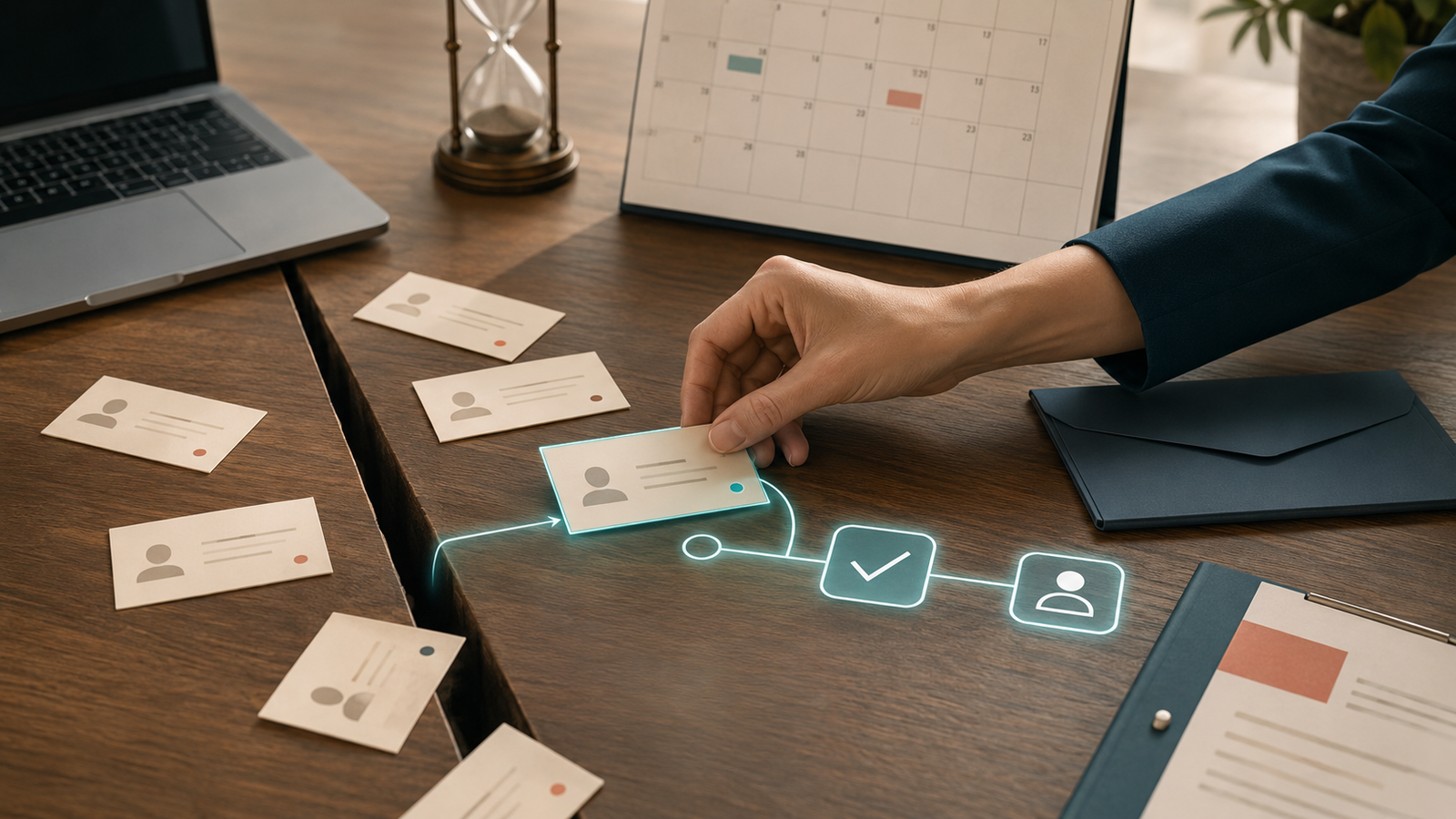
If you run a service business you know the feeling: sporadic leads, scattered tools, and too many manual follow ups that waste time and money. You want predictable revenue, not luck.
That is where marketing automation for service businesses becomes a game changer. When done right, automated funnels, email sequences, and CRM workflows turn random inquiries into repeatable sales without you doing everything manually.
Why marketing automation matters for service businesses
Here is the thing, most service providers are great at the core service but not at running a multi-step marketing machine. Automation closes that gap by:
- Capturing leads reliably from ads, forms, and social media
- Delivering the right email at the right moment to build trust
- Scoring and routing qualified leads to your calendar or sales rep
- Re-engaging cold leads automatically, without manual outreach
That translates to steadier lead flow, higher conversion rates, and more predictable revenue.
Quick reality check, email is still one of the highest ROI channels. Industry reports show email marketing often returns dozens of dollars for every dollar spent, which makes it the backbone of most revenue engines. See a summary of current email ROI benchmarks from Forbes Advisor for context. (Forbes Advisor: https://www.forbes.com/advisor/business/software/email-marketing-statistics-mar-26/)
How funnels, email sequences, and CRM automation work together
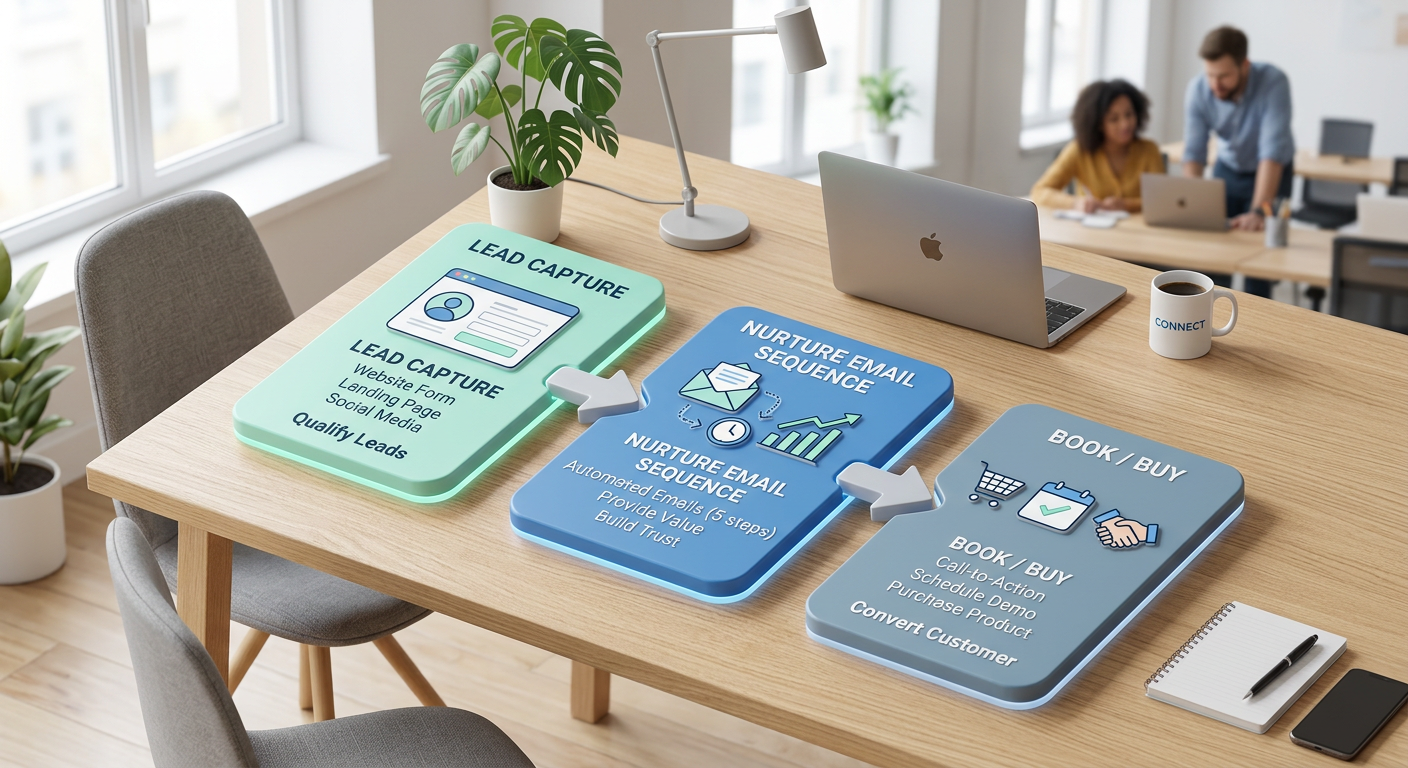
1. The funnel captures and qualifies
A conversion-focused funnel uses landing pages, lead magnets, and paid ads to attract the right prospects. For service businesses the lead magnet might be a free consultation, checklist, or short video that demonstrates value.
2. Email funnels nurture and convert
Automated email sequences nurture cold leads through value, social proof, and clear next steps. Welcome sequences, educational drip campaigns, and limited-time offers move prospects to a booked call or purchase.
3. CRM automation closes the loop
When a lead takes a key action the CRM updates automatically, triggers follow-up tasks for sales, and begins lifecycle-based automation. That reduces dropped leads and strengthens handoffs between marketing and sales.
4. Reporting and optimization
Track the funnel conversion rates, email engagement, and revenue per campaign. Optimization cycles then improve creative, offers, and segmentation to increase ROI.
A simple implementation framework you can follow this month
Week 1, Capture
- Build a single focused landing page with one primary call to action.
- Offer a small, high-value lead magnet relevant to your service.
- Connect the landing page to your CRM and email platform.
Week 2, Nurture
- Create a 5-email welcome/nurture sequence. Include a welcome, social proof, 2 value emails, and a booking prompt.
- Personalize content with dynamic fields and behavioral triggers.
Week 3, Qualify & Route
- Add lead scoring based on page views, email clicks, and form answers.
- Route high-score leads to instant booking links and assign tasks to sales.
Week 4, Optimize
- Review open and conversion rates, then A/B test subject lines, CTA placement, and landing page copy.
- Add one re-engagement automation for inactive leads.
Examples by niche (practical flows you can copy)
Coaches and consultants
- Lead magnet: 15-minute clarity call
- Email flow: Welcome, case study, mini-training, objection handling, booking urgency
- Automations: Auto-assign to coach when lead books
Wellness and medspas
- Lead magnet: Before/after guide or first-visit discount
- Email flow: Treatment benefits, testimonials, safety FAQ, appointment booking
- Automations: Trigger SMS reminders and pre-visit intake forms
Local service businesses (plumbing, HVAC, landscaping)
- Lead magnet: Seasonal maintenance checklist
- Email flow: Trust-building tips, local reviews, limited-time service bundle
- Automations: Geo-tagging for localized offers and dispatch-ready work orders
Common objections and how to handle them
Objection: “Automation will feel robotic.”
Response: Use personalization, conversational copy, and human follow-up triggers so automation amplifies human touch instead of replacing it.
Objection: “I do not have time to build it.”
Response: Start small with one funnel and a short email sequence. The initial time investment pays back quickly through higher conversions and lower manual effort.
Objection: “It costs too much.”
Response: Compare automation costs to the revenue lost from missed leads. Many businesses see ROI in weeks when funnels are built correctly. For platform-level outcomes, HubSpot and other vendors publish ROI case studies showing measurable lift from integrated marketing and CRM platforms. (HubSpot report: https://www.hubspot.com/company-news/hubspot-named-a-leader-in-the-2023-gartner-magic-quadrant)
Tools and stacks that work for service businesses
- Landing pages: Unbounce, Leadpages, or a builder inside your CRM
- Email & automation: ActiveCampaign, Mailchimp, ConvertKit, or platform-native tools
- CRM: HubSpot, Pipedrive, or GoHighLevel for agency-focused setups
- Scheduling: Calendly, Acuity, or built-in booking
- SMS & reminders: Twilio integrations or built-in CRM texting
Pick tools that minimize data silos, or use an integration layer so leads flow cleanly from ad to inbox to calendar.
Frequently asked questions
What exactly is marketing automation for service businesses?
Marketing automation is a set of tools and workflows that capture leads, send tailored messages, score and route prospects, and trigger actions like bookings or follow-ups, all with minimal manual work.
How long until I see results from an automation system?
You can see improvements in lead follow-up and booking rates within weeks, but meaningful revenue uplift often appears in 1 to 3 months as you optimize messages and funnel steps.
Do I need expensive software to get started?
No. Start with affordable tools and a focused funnel. Many platforms offer free tiers or trial periods. The bigger cost is often time and strategy, not the tools.
Can automation replace my sales team?
No. Automation amplifies your team, handling routine tasks and lead qualification so your salespeople can focus on high-value conversations.
What metrics should I track first?
Track leads captured, email open and click rates, funnel conversion rates, booking rate, and revenue per lead. Those metrics tell you where the bottlenecks are.
How do I keep automation personal and compliant?
Use personalization fields, segment lists, and write human-focused copy. Also follow local regulations like CAN-SPAM and include opt-outs in every email.
Next steps you can take this week
- Choose one high-value offer to use as a lead magnet.
- Build a single landing page and connect it to your email platform.
- Draft a short 5-email nurture sequence and set a booking trigger.
If you want help building a full revenue engine, we build funnel strategy, email campaigns, CRM setups, and automation workflows designed for service providers.
Ready to scale predictable revenue?
If you are done with feast-and-famine lead flow and want a reliable system that converts, let’s build your revenue engine. Learn about tailored services and funnel builds at https://kieffermedia.com. Our team focuses on service businesses and delivers funnels, automation, and email systems that actually convert.
Conclusion
Marketing automation for service businesses is not a magic button, but it is the most reliable way to turn inconsistent interest into repeatable revenue. Start with one funnel, automate the high-impact follow-ups, and keep optimizing. Done well, automation frees you to focus on delivering excellent service while your system quietly grows sales.